Water Removal & Extraction in Boise
Standing water can move into floor cavities, porous materials and crawl spaces. Ask about removal and the moisture that may remain after visible water is gone.
24/7 referral line · Boise & Treasure Valley
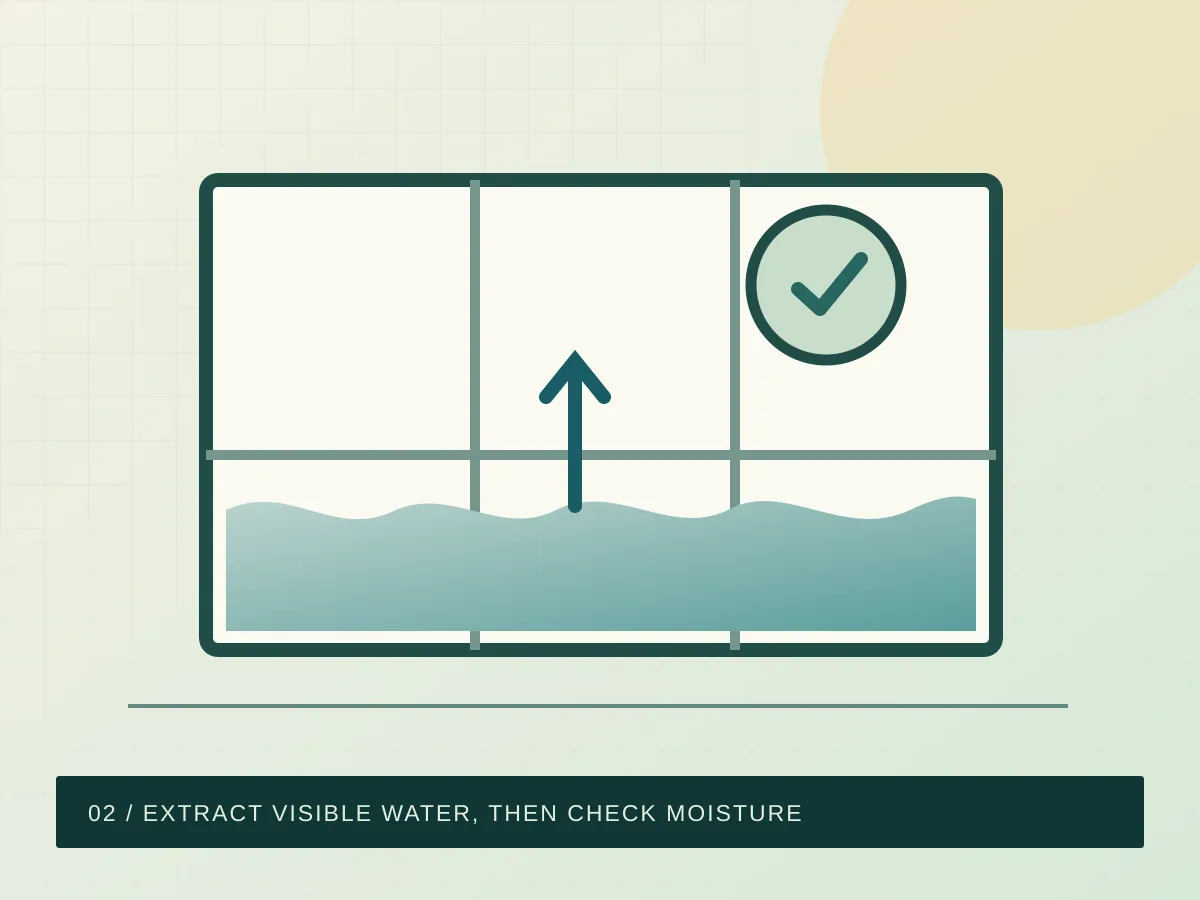
Extraction is a first step, not the whole job
Water removal generally means extracting accessible standing water. A provider may use pumps or extraction equipment, then assess materials that hold moisture. Drying and moisture checks are separate parts of the work. Removing water from a floor does not establish that the floor assembly, wall cavities or contents are dry.
The source of the water matters. A supply-line leak, a roof leak and outdoor floodwater call for different safety and cleanup decisions. If the source is unclear, tell the provider what you can see without entering an unsafe area. Do not assume clear-looking water is safe.
For water that entered from outdoors, see flood cleanup in Boise. To limit the spread while the space dries, see water mitigation. If moisture has already led to growth, see mold remediation.
Questions to take into the call
Identify the source
Describe the leak, seepage or flood without guessing at what is hidden. Ask whether the provider handles this type of water and what must happen before work starts.
Ask about extraction
Find out how accessible standing water will be removed and whether there are wet materials that need a different assessment.
Plan for drying
Ask how remaining moisture is measured, how drying progress is checked and what documentation you will receive.
Water removal across the Treasure Valley
Calls from Boise and these nearby cities are connected with independent providers serving each area:
- Water removal in Meridian
- Water removal in Caldwell
- Water removal in Nampa
- Water removal in Eagle
- Water removal in Kuna
- Water removal in Star
- Water removal in Garden City
- Water removal in Mountain Home
- Water removal in Fruitland
- Water removal in Payette
- Water removal in Emmett
Good to know
Is water removal the same as water mitigation?
Not exactly. Removal addresses accessible water; mitigation may also include measures to limit further damage and monitor drying. The scope depends on what a provider finds.
Can someone remove water from a crawl space?
Some providers handle crawl-space water, but access, hazards and the water source matter. Ask the independent provider about their capability before making arrangements.
Who removes standing water from a home?
A water damage restoration or water extraction provider. They use pumps and truck-mounted or portable extractors to remove standing water, then set up drying equipment. Call (208) 858-8144 to connect with one serving Boise.
My house is flooding. Who do I call?
If water is rising near electrical equipment or the building is unsafe, leave and call 911 or your utility first. Shut off the main water valve if you can reach it safely. Then call to connect with an independent provider for emergency water extraction.
Will insurance cover water extraction?
Coverage depends on your policy and the cause of loss. Document what happened and ask your insurer directly; a referral is not a coverage decision.
Water where it should not be?
Call and say where the water came from and where you are. You will be connected with an independent local restoration provider.